

The 4 Capitals of Development – How Belmer Collective Approaches Land
The 4 Capitals of Development – How Belmer Collective Looks at Your Land
Most conversations about land start with two questions:
“Can I get planning on this?”
“What’s it worth if I do?”
Both matter. But if that’s all you focus on, you miss the bigger opportunity:
What kind of place does your land become – and what does that mean for value, community, and your legacy?
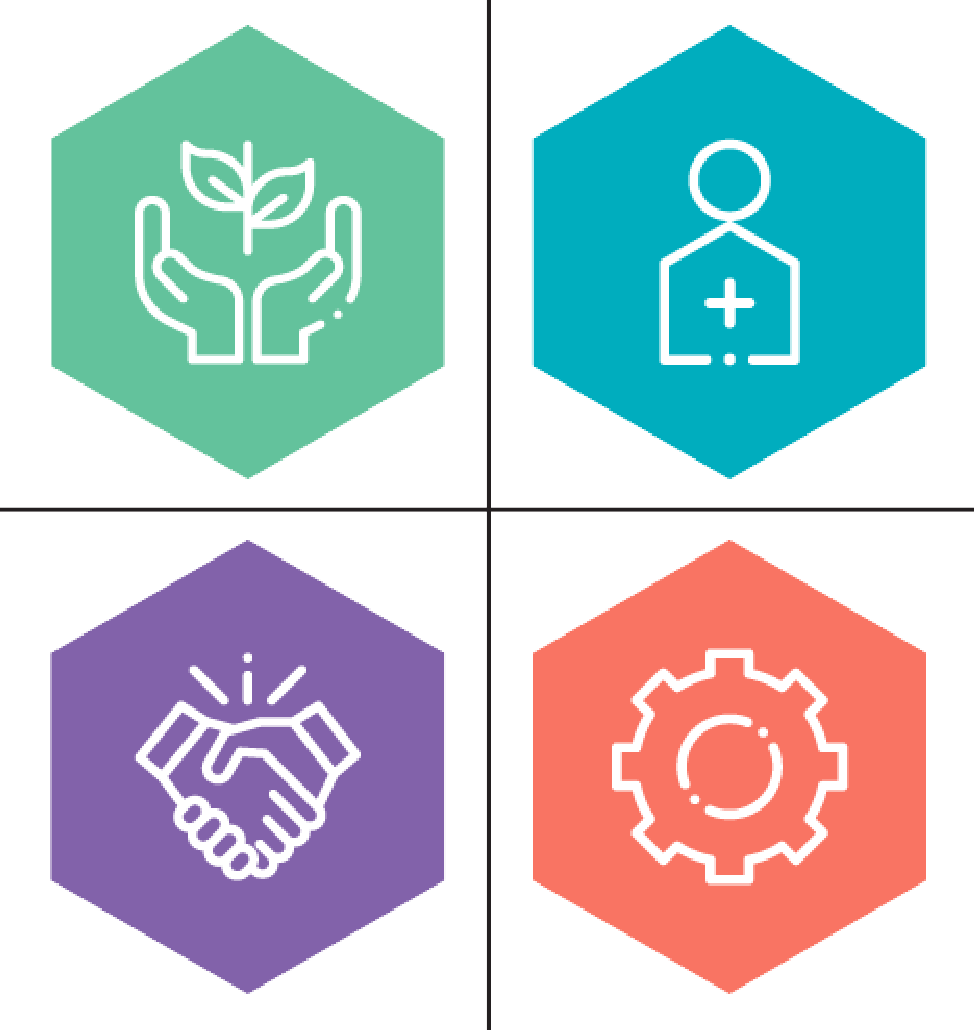
At Belmer Collective, the way we answer that is through what’s often called the 4 Capitals of Development.
It’s a simple framework we use to think about land and planning uplift in a more rounded way:
Natural Capital – the environment and ecology
Social Capital – community and relationships
Human Capital – people’s wellbeing, skills, and experience
Produced Capital – the buildings, infrastructure, and financial return
Instead of just “how many units can we squeeze on here?”, we’re asking:
How will this land perform across all four capitals?
Where can we add value – not just on a spreadsheet, but on the ground?
How do we align planning, design, and delivery with what you actually care about?
This isn’t fluffy. Done properly, it can improve saleability, planning outcomes, and how your scheme is received locally.
Let’s break it down.
1. Natural Capital – More Than “Green Space”
Natural capital is everything to do with the environment on and around your land:
Air quality
Water and drainage
Soil and land quality
Trees, habitats, and biodiversity
How resilient the place is to climate and weather
When we look at a site, we’re asking:
What natural assets already exist here?
How could development enhance them rather than wipe them out?
Are there obvious wins – planting, SuDS, habitat creation – that help both planning and value?
For a landowner, this matters because:
A scheme that handles flood risk, biodiversity, and landscaping intelligently will usually stand a better chance with planners.
Buyers increasingly care how “green” a development feels – which feeds into sale values and demand.
You’re not the landowner who “ruined the field” – you become the landowner who helped create something better.
2. Social Capital – How Well the Place “Belongs”
Social capital is about how people and communities connect around the land:
Is the scheme seen as part of the community or dropped on top of it?
Does it improve local connections, or strain them?
Does it feel fair?
We look at things like:
Access to local services and facilities
How new homes or uses sit with the existing settlement
Opportunities for local benefit – footpaths, play areas, small pockets of public space, or contributions that genuinely help the area
For you as a landowner, thinking about social capital can:
Reduce the risk of local backlash that stalls or derails planning.
Support a narrative that this isn’t “just development” – it’s a considered addition to the village/town.
Help you feel more comfortable with the idea of change on your land because the outcome is clearly positive for more than just the bottom line.
3. Human Capital – The Experience People Actually Have
Human capital is all about people’s health, experience, and opportunity:
What is it like to live there, work there, or live next to it?
Does the place support good mental and physical health?
Is it creating decent work or training opportunities during delivery?
We think about:
Daylight, privacy, and outlook for new homes
Noise, traffic, and disruption during construction
How comfortable, safe, and pleasant the place will feel over time
Whether the project can support local skills and jobs, directly or through the development team
Why this matters for you:
A development that “feels good” to be in tends to perform better in the market and age more gracefully.
Good design around comfort and health can support planning arguments – especially where policy leans into wellbeing.
You’re not just selling land; you’re enabling somewhere people actually want to live.
4. Produced Capital – The Hard Numbers and the Built Form
Produced capital is what most people fixate on:
The buildings and infrastructure
The financial return
The cost to deliver and the income generated
We’re interested in:
How to get a workable, policy-compliant scheme that makes commercial sense
The balance between density and quality
The build methods (traditional vs modern methods of construction) and what that means for speed, quality, and cost
The long-term performance of what gets built (maintenance, running costs, appeal over time)
For landowners, this is still critical:
The produced capital is where the headline numbers live – gross development value, land value, investor appetite.
But it’s also where short-term thinking can damage everything else. Cheap, low-quality schemes might overpromise on paper but underperform in reality, or struggle at planning stage.
At Belmer Collective, we’re looking for the sweet spot:
Strong enough numbers to make the scheme attractive to the market and funders
A design and delivery approach that supports the other three capitals instead of undermining them
How We Use the 4 Capitals at Belmer Collective
For us, the 4 capitals aren’t an abstract model. They shape how we work with you from the moment we first look at a site.
1. Understand You and Your Priorities
Every landowner is different.
Some care most about:
Legacy – “I don’t want it to be an eyesore.”
Some focus on:Financial outcome – “I want to unlock the best possible value.”
Others worry about:Neighbours and reputation – “I don’t want to fall out with the village.”
We’ll have an open conversation to understand:
What matters most to you across the four capitals
What you absolutely don’t want to see happen with your land
What “a good outcome” looks like in plain English
From that, we can help shape a project mission – a simple statement of what we’re trying to achieve with your land.
2. Look at How the Site Performs Across the 4 Capitals
Alongside our planning and technical team, we review:
Natural constraints and opportunities
Policy context and what’s realistically deliverable
Social and human factors – local sentiment, context, and likely community concerns
The commercial potential – what sort of scheme the market might support
The aim is to spot where the value really sits:
Maybe the site has strong natural assets that can support a high-quality, landscape-led scheme.
Maybe it’s all about connectivity and social benefit – stitching into an existing settlement in a way planners and locals can get behind.
Maybe it’s a more urban, infrastructure-focused opportunity where produced capital (buildings and economic activity) dominates, but we still look for ways to support the other capitals.
3. Align Planning Strategy With Those Capitals
Once we know what matters – to you, to the site, and to policy – we work with our planning and design partners to:
Shape a realistic concept that stands a chance at planning
Build a planning case that doesn’t just say “this meets policy”, but shows how it delivers value across the four capitals
Prepare something that the market can understand and price properly when the time comes to sell
This is where the four capitals turn into real decisions: layout, density, typology, landscaping, access, design quality, and so on.
4. A Better Story for Buyers, Planners, and the Community
By the time a scheme is ready to go to market, the four capitals give you a much stronger story:
For planners – a scheme that’s thought-through and aligned with wider objectives (not a speculative box-ticking exercise).
For buyers and developers – clarity on the type of scheme, its strengths, and why it’s likely to perform well.
For you – confidence that the uplift you’ve unlocked isn’t just a number, but a place you’re comfortable putting your name to.
Why This Matters for You as a Landowner
You don’t need to become an expert in frameworks or planning language. That’s what we’re here for.
What matters is this:
You put your land in the hands of people who think beyond a quick flip.
Planning isn’t pursued in a vacuum – it’s grounded in what’s best for you, the land, and the place it sits in.
When you do realise the value, you know you’ve helped create something that stands up across natural, social, human, and produced capital.
That’s how Belmer Collective approaches land:
Not just “Can we get planning?” but “Can we create value on all four fronts?”
If you’re sitting on land and wondering what’s possible – or you’re already in talks with a developer and want a second opinion – we can walk your site through this 4-capital lens and give you a clear, honest view of its potential and the kind of scheme that might make sense.